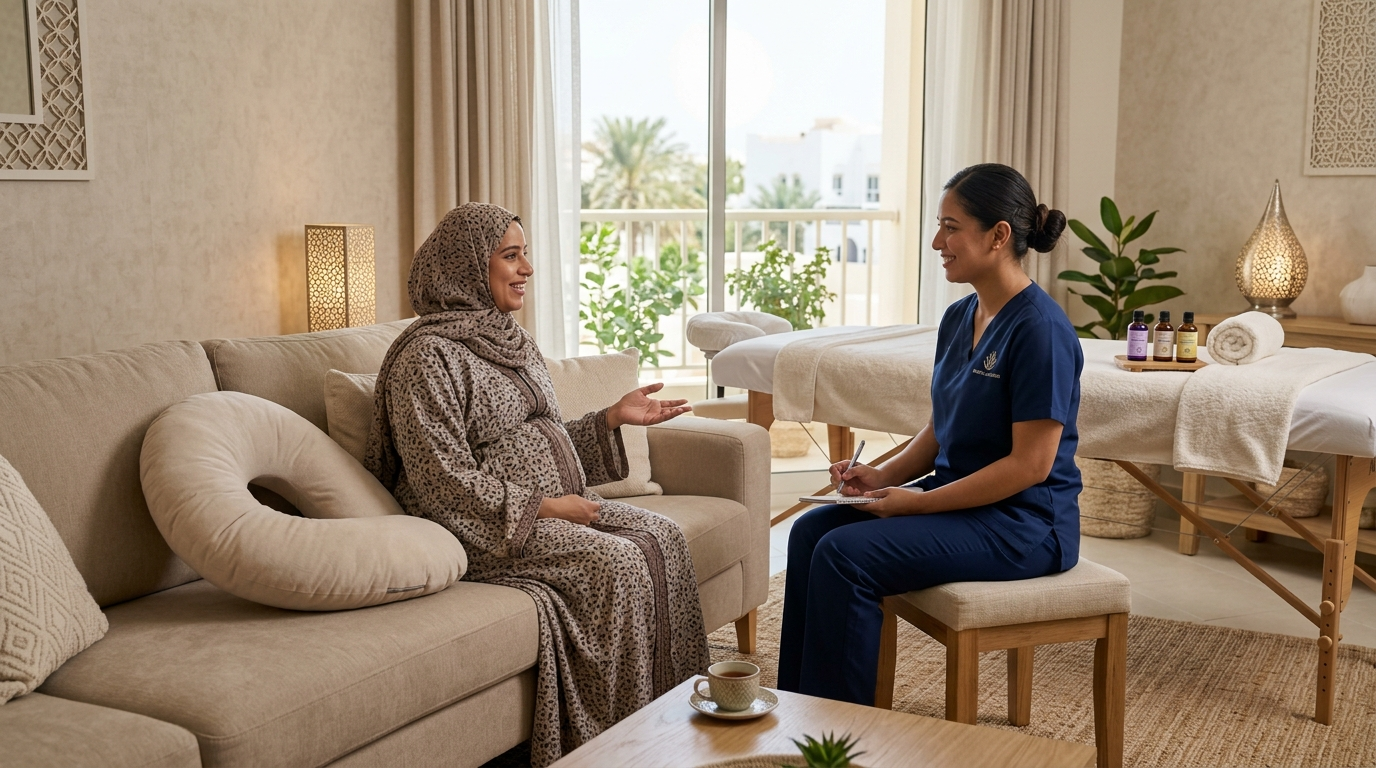
Pregnancy massage can suit many healthy pregnancies, but it is not the right choice for every woman. Before booking a prenatal massage, discuss your pregnancy history, current health, trimester, and any medical concerns with your healthcare provider. Nasma Relaxation offers gentle pregnancy massage in Muscat with trained female therapists and comfort focused positioning.
Pregnancy changes your body throughout each trimester. Your back, hips, legs, shoulders, and feet may need extra comfort.
A prenatal massage can support relaxation and ease everyday muscle tension. However, your healthcare provider understands your individual pregnancy better than any massage provider.
That makes a short conversation with your doctor or midwife an important first step.
What Is Prenatal Massage?
Prenatal massage is a massage adapted for pregnancy. It uses suitable pressure, positioning, and techniques for expecting mothers. A trained prenatal massage therapist understands how pregnancy changes the body. She can adjust the session around your trimester and comfort level.
Side lying is commonly used during pregnancy massage. Supportive pillows can help position the body comfortably.
The American College of Obstetricians and Gynecologists says massage can help pregnant women relax and improve circulation. It also recommends lying on your side rather than face down during pregnancy massage.
Prenatal massage is also different from deep tissue massage. Pregnancy sessions usually use gentler pressure and supportive positioning.
Is Pregnancy Massage Right for Everyone?
Pregnancy massage can be suitable for many women with healthy pregnancies. However, individual circumstances can change the answer. Your healthcare provider can review your pregnancy history first. This includes your current trimester and any existing pregnancy related conditions.
You may also need individual guidance if your pregnancy requires additional medical monitoring. This does not mean massage is automatically unsuitable. It simply means your doctor can provide advice based on your specific situation.
A healthcare provider can tell you whether massage fits your current pregnancy care plan.
Why Should You Speak With Your Healthcare Provider First?
Your doctor or midwife has access to your pregnancy history. They also understand your current health and prenatal care needs. A massage therapist can provide massage expertise. Your healthcare provider provides medical guidance. These roles work together.
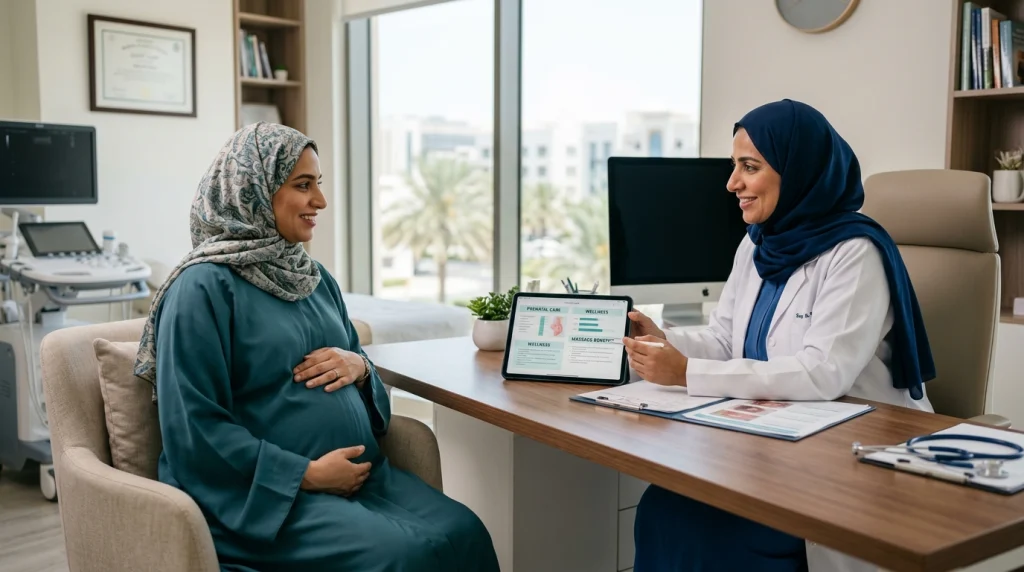
Before your appointment, ask whether prenatal massage is appropriate for you. You can also ask about timing, positioning, pressure, and any areas your therapist should avoid. This conversation can help you book with greater confidence.
10 Questions to Ask Your Healthcare Provider
You do not need a long medical discussion. A few focused questions can give you useful guidance.
1. Is Prenatal Massage Suitable for My Pregnancy?
Start with the most important question. Ask your doctor whether massage is appropriate for your current pregnancy. Mention that you are considering a professional prenatal massage. Your provider can consider your pregnancy history and current health information.
2. When Can I Start Pregnancy Massage?
Timing can vary between pregnancies and providers. Some prenatal massage providers recommend beginning during the second trimester. Current clinical guidance also commonly discusses the second trimester as a suitable starting point for many healthy pregnancies.
However, your own healthcare provider should guide your timing. Ask whether you can start now or whether waiting would better suit your pregnancy.
3. How Often Can I Have Prenatal Massage?
There is no single schedule that suits every expecting mother. Your provider can discuss frequency based on your pregnancy and overall wellbeing. You can then discuss suitable session lengths with your massage therapist.
For example, some women may prefer occasional relaxation sessions. Others may want regular prenatal massage as part of their wellness routine. The important point is to create a schedule that fits your pregnancy care.
4. Which Massage Position Should I Use?
Positioning becomes increasingly important as pregnancy progresses. Ask your healthcare provider about comfortable positions for your current trimester.

Prenatal massage commonly uses side lying positioning with supportive cushions. ACOG also recommends side lying during pregnancy massage rather than lying face down.
Your therapist can then arrange pillows around your belly, knees, back, and head. Comfort should guide the position throughout the session.
5. What Pressure Level Is Appropriate?
Prenatal massage generally uses lighter pressure than many regular massage treatments. Ask your provider if you have specific concerns about pressure. Then communicate your preferences clearly with your therapist.
Cleveland Clinic notes that prenatal massage generally uses light to medium pressure rather than deep pressure. Your therapist should also check your comfort during the session. You can always ask for lighter pressure if needed.
6. Are There Areas My Therapist Should Avoid?
This is another useful question for your healthcare provider. Ask whether there are specific areas that need special consideration during your pregnancy.
Your doctor can provide guidance based on your medical history. Share that guidance with your massage therapist before treatment. This helps your therapist personalize the session.
7. Does My Pregnancy Need Special Medical Consideration?
Some pregnancies receive additional medical monitoring. Your provider can explain whether that applies to you. Conditions involving blood pressure, blood clots, diabetes, bleeding, or other pregnancy complications can affect massage decisions.
Cleveland Clinic specifically recommends discussing prenatal massage with a healthcare provider when pregnancy complications or high risk factors are present. Do not rely on a general online checklist to assess your pregnancy.
Your own healthcare provider can give you guidance based on your medical records and current pregnancy.
8. Can I Have Massage During My Current Trimester?
Your trimester can influence positioning and comfort. During the second trimester, your abdomen begins changing more noticeably. During the third trimester, your growing belly can affect movement and sleeping positions.
A trained prenatal massage therapist can adapt the session to these changes. Ask your provider which positioning and timing suit your current stage.
9. Are There Symptoms I Should Discuss Before Massage?
Always tell your healthcare provider about symptoms that concern you. You can ask whether symptoms such as unusual swelling, abdominal discomfort, dizziness, bleeding, or other changes require medical attention before massage.
Pregnancy symptoms can have different causes. Your healthcare provider is the right person to assess them. Massage should be part of your wellness routine, not a way to assess pregnancy symptoms.
10. Can I Combine Prenatal Massage With My Current Prenatal Care?
Massage can complement your pregnancy wellness routine. Your regular prenatal appointments remain important throughout pregnancy. Ask your provider how massage can fit alongside your current care plan.
This gives you a clear understanding of how relaxation services can support your overall pregnancy experience.
Who May Need Extra Medical Guidance?
Some women may benefit from a detailed conversation with their healthcare provider before booking.
This can include women with:
• High blood pressure during pregnancy
• Blood clot concerns
• Gestational diabetes
• Bleeding concerns
• A high risk pregnancy
• Previous pregnancy complications
• Significant swelling
• Unexplained symptoms
• Other conditions requiring medical monitoring
This list is not a personal diagnosis guide. Your healthcare provider can explain what applies to your pregnancy.
Cleveland Clinic lists blood clots, high blood pressure, diabetes, preeclampsia, bleeding disorders, and high risk pregnancy among situations requiring particular medical discussion before massage.
What Should You Tell Your Massage Therapist?
Once your healthcare provider gives you guidance, share the relevant information with your therapist.
Tell your therapist:
• How many weeks pregnant you are
• Which trimester you are in
• Your preferred massage pressure
• Areas needing gentle attention
• Comfortable positions
• Any guidance from your healthcare provider
• Any product preferences
• Any areas requiring special care
You should also tell your therapist if your comfort changes during the appointment. Good communication creates a more personalized prenatal massage experience.
Why Therapist Training Matters During Pregnancy
Pregnancy massage requires a different approach from standard massage. The therapist needs to understand pregnancy positioning. She also needs to recognize how pressure and body support should change. A trained therapist can use side lying positioning and supportive cushions. She can also adjust the session as your pregnancy progresses.
Nasma Relaxation provides pregnancy massage in Muscat through trained female therapists. The service focuses on gentle techniques, supportive positioning, comfort, and privacy.
If you are comparing providers, our guide on how to choose a pregnancy massage service in Muscat covers therapist training, positioning, hygiene, and pricing.
What Happens During a Pregnancy Massage?
Your therapist should begin by discussing your comfort. You can share your trimester and preferred focus areas. Your therapist can then prepare the massage setup.
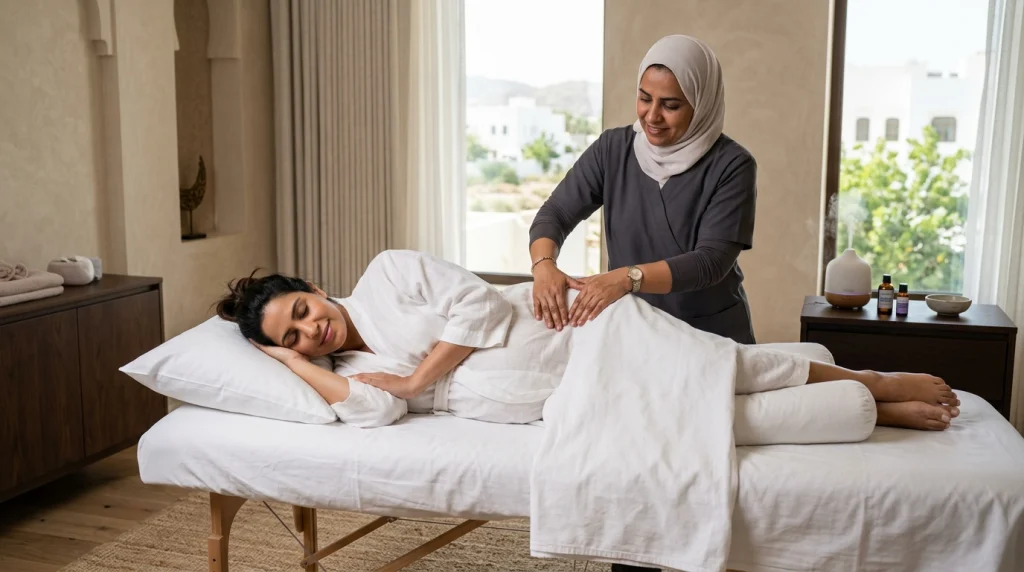
Side lying positioning is commonly used. Pillows and cushions can support your body during the session. The massage itself should use gentle techniques suitable for pregnancy.
Common focus areas include:
• Lower back
• Hips
• Shoulders
• Neck
• Legs
• Feet
Your therapist should check your comfort during the session. If something feels uncomfortable, tell your therapist immediately. The technique or position can then be adjusted.
Can Pregnancy Massage Help With Common Pregnancy Discomfort?
Pregnancy massage can support relaxation and physical comfort. Many expecting mothers seek prenatal massage for areas such as the lower back, hips, legs, and shoulders.
Professional sources describe prenatal massage as a complementary approach that may help with stress and common pregnancy discomforts. However, massage should not be used to diagnose or treat pregnancy complications.
If you have a new or concerning symptom, speak with your healthcare provider first.
Pregnancy Massage at Home in Muscat
A home pregnancy massage can make the experience more convenient. Nasma Relaxation brings the massage setup directly to your home in Muscat. The service includes trained female therapists, fresh linens, professional equipment, and personalized care.
You can enjoy the session in a familiar environment. There is also no need to travel across Muscat before or after your appointment.
This can be especially convenient during later pregnancy when movement becomes less comfortable. Explore our pregnancy massage service in Muscat to learn more about the treatment.
How to Prepare for Your Pregnancy Massage
Once your healthcare provider gives you suitable guidance, preparing for your session is simple.
Choose a quiet room with enough space for the massage setup.
Wear comfortable clothing before your therapist arrives.
Keep some drinking water nearby.
Tell your therapist about your preferred pressure and focus areas.
You can also review our guide on questions to ask before booking pregnancy massage before confirming your appointment.
These simple steps can make your home session more comfortable.
Pregnancy Massage and Essential Oils
Massage oils are often used to support smooth massage movements. During pregnancy, product selection deserves extra attention. Tell your therapist about skin sensitivity or product preferences before treatment.
If you are considering aromatherapy, ask your healthcare provider about the products you plan to use. Your therapist can also discuss the available massage oil options before the session. For pregnancy massage, comfort and suitable product choices should come first.
What If Your Doctor Recommends Waiting?
Your healthcare provider may recommend waiting before starting massage. Follow that guidance and ask when you can revisit the option. Pregnancy changes throughout each trimester. Your care plan can also change as your pregnancy progresses.
You can always discuss massage again during a later prenatal appointment. The goal is to make massage fit comfortably within your pregnancy care.
What If You Already Have a Massage Appointment?
If you have already booked a session, simply tell the therapist that you are pregnant. Share your trimester and any guidance from your healthcare provider. If your provider recommends a particular position or adjustment, communicate it before treatment begins.
Your therapist can then plan the session around that information. ACOG specifically advises telling your massage therapist that you are pregnant, including when pregnancy is not yet visibly showing.
Frequently Asked Questions
Is pregnancy massage safe for everyone?
Pregnancy massage can suit many women, particularly those with healthy pregnancies. However, individual medical circumstances vary. Discuss massage with your healthcare provider before booking.
When is the best time to start pregnancy massage?
Many providers recommend starting during the second trimester. Your doctor or midwife can advise you based on your pregnancy history and current health.
Can I have a massage during the first trimester?
Ask your healthcare provider before booking during the first trimester. Timing recommendations can vary based on your individual pregnancy.
What position is used for prenatal massage?
Side lying is commonly used during prenatal massage. Supportive pillows can help keep your body comfortable and properly supported.
Can I get prenatal massage with high blood pressure?
Speak with your healthcare provider first. High blood pressure during pregnancy requires individual medical guidance before massage.
Can I have pregnancy massage with gestational diabetes?
Discuss it with your healthcare provider before booking. Your provider can consider your current pregnancy care and health needs.
Should I choose a trained prenatal massage therapist?
Yes. Pregnancy massage requires knowledge of suitable positioning, pressure, and pregnancy related body changes.
Can I book pregnancy massage at home in Muscat?
Yes. Nasma Relaxation provides pregnancy massage at home across Muscat with trained female therapists.
Should I tell my massage therapist about my pregnancy?
Yes. Always tell your therapist that you are pregnant. Share your trimester and any relevant guidance from your healthcare provider.
Can pregnancy massage replace prenatal care?
No. Massage is a complementary wellness service. It does not replace prenatal appointments, medical advice, or pregnancy treatment.
A Simple Conversation Can Make Your Decision Easier
Pregnancy massage can be a relaxing part of your pregnancy wellness routine. The important step is making sure it fits your individual pregnancy. Before booking, discuss your trimester, health history, symptoms, positioning, pressure, and timing with your healthcare provider.
Then choose a therapist who understands prenatal massage and communicates clearly with you. For expecting mothers in Muscat, Nasma Relaxation offers pregnancy massage in Muscat with trained female therapists and home service convenience.
If your healthcare provider gives you the go ahead, contact Nasma Relaxation to discuss your preferred date, location, and pregnancy massage session.
Ready to Experience 5-Star Home Wellness in Muscat?
Contact our certified female therapists on WhatsApp for same-day bookings across Muscat (Al Khuwair, Qurum, Bausher, Al Mouj, Ruwi).
Book Now on WhatsApp (+968 7643 3822)